
 Top Software
Resources
Fun Archives
|
A Bit of History...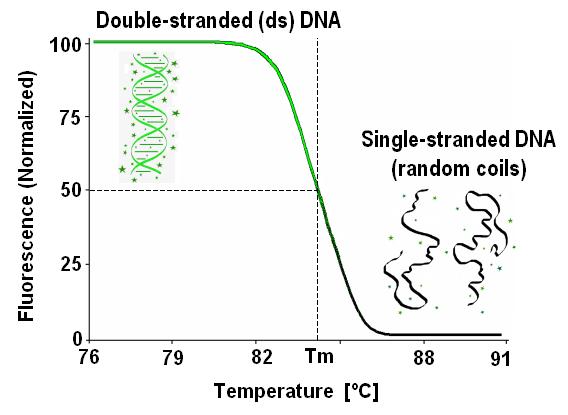 New to Melting? Watch the High-Resolution Melting Webinar with Dr. Carl Wittwer (Biotechniques, 2017) High-resolution melting analysis was introduced in 2003. Similar to the LightCycler, this too was a result of collaboration between our lab at the University of Utah and Idaho Technology, Inc (Salt Lake City, UT). The method requires high precision measurements of temperature and fluorescence to detect small sequence differences in PCR fragments, just by direct melting. Melting curve analysis for genotyping, mutation scanning, sequence matching, and copy number assessment were developed - analyses that traditionally required processing of PCR products by electrophoresis or other non-homogeneous means. Because of its speed and simplicity, the method rapidly grew in popularity. To read more, please follow the colored tabs in the navigation bar (top of page) .. Key references Contact us to receive reprints.
| |||||||||||||||||||||||

| © 2006- Wittwer Lab. All Rights Reserved. |